Buying a restaurant franchise is one of the largest investments you’ll make, and the answers you collect before signing shape every year that follows. The right questions to ask when buying a restaurant franchise help you compare true costs and test support promises before you commit. You’ll get far more from each conversation when you know what a strong answer looks like.
This guide pairs every question with a real answer, drawn from our own 2026 franchise disclosure document (FDD). World of Beer Bar & Kitchen is a full-service craft beer restaurant pouring more than 250 beers from over 40 countries. Read our answers alongside the World of Beer franchise opportunity, and you’ll see how a franchisor should respond when you ask.
Key Takeaways
- Use the full 14-day FDD review window before you sign or pay, and read Items 5, 6, 7, 12, 19, and 20 first.
- Budget for the total investment, because our $50,000 fee sits inside a $1,892,330 to $3,962,125 single-unit estimate (Item 7, 2026 FDD).
- Call current and former franchisees listed in the FDD’s exhibits, and ask what opening really cost and how long it took.
- If the restaurant serves alcohol, confirm who secures the liquor license and how royalties work in states that prohibit percentage fees on alcohol.
- Get every territory and renewal promise in writing, because only the signed franchise agreement governs your relationship with the franchisor.
Know These Important Franchising Terms and Resources First
The best questions to ask when buying a restaurant franchise cover seven areas. They test your own readiness, the franchisor’s track record, total costs, earnings data, support, territory, and contract terms. Many of the answers live in the franchise disclosure document, a legal document the franchisor must give you before you sign.
A franchise is a license to run a business under an established brand and operating system. The franchisor owns the brand (for us, World of Beer Franchising, LLC). The franchisee is the owner who buys the right to operate a location.
A royalty is the ongoing fee a franchisee pays the franchisor, usually a percentage of sales. Those royalties fund the training and support you’ll rely on, which is why the FDD spells them out in detail. Knowing these terms makes the rest of the document much easier to read.
Per the FTC Franchise Rule, “The Rule requires franchisors to provide all potential franchisees with a disclosure document containing 23 specific items of information about the offered franchise, its officers, and other franchisees.” The FTC also requires franchisors to deliver that document at least 14 calendar days before you sign or pay. Our 2026 FDD, issued April 30, 2026 and revised July 30, 2026, follows the same 23-item structure.
Timing matters too, and the 2026 numbers favor sit-down dining. Per the IFA press release on 2026 outlook, “For the first time since the pandemic, full-service restaurants are expected to outpace quick service restaurants (QSR) in output growth.” That trend fits World of Beer Bar & Kitchen, a full-service craft beer restaurant with a chef-inspired menu and rotating taps.
Questions to Ask Yourself First
Before you judge any franchisor, assess your own fit. Start with capital. For example, our ideal owner has at least $750,000 in liquid capital, meaning cash or assets you can access quickly.
Item 10 of our 2026 FDD states that we offer no direct financing, so you’ll need lenders or your own resources. Decide how much of your net worth you’ll place in one business, and talk with a lender early.
Next, decide how involved you’ll be. You might run the restaurant day to day, or you might hire an Operating Manager to lead the team while you oversee the business. Ask any franchisor which ownership roles it allows and who must complete training, because that choice shapes your staffing budget.
Be honest about the work itself. A craft beer restaurant runs on hospitality, nights, weekends, and a beverage-forward menu that needs constant attention. You’ll also follow a proven system, which means using approved recipes and suppliers even when you’d prefer your own approach.
That trade is the heart of franchising. You give up some creative control, and in return you get a tested model backed by a known brand. If following a playbook frustrates you, an independent restaurant may suit you better.
Finally, compare formats. Quick-service and full-service models demand very different capital and staffing, so review the best restaurant franchise opportunities before you narrow your list. While it’s recommended, World of Beer doesn’t require prior restaurant experience. Candidates with a strong business and operations background who meet the financial qualifications are generally a strong fit.
Questions to Ask the Franchisor About Its History and Concept
Once you know you’re ready, turn to the franchisor’s track record. Ask how long the company has franchised and how many locations it runs itself. Company-owned units matter because they show the franchisor is willing to put its own money into the model.
Item 1 of World of Beer’s 2026 FDD lists 14 company-affiliated restaurants. Our own teams run the same system you would. The menus and technology we hand you are the ones we use every day. Ask any franchisor how many units it operates directly and whether those results appear in its FDD.
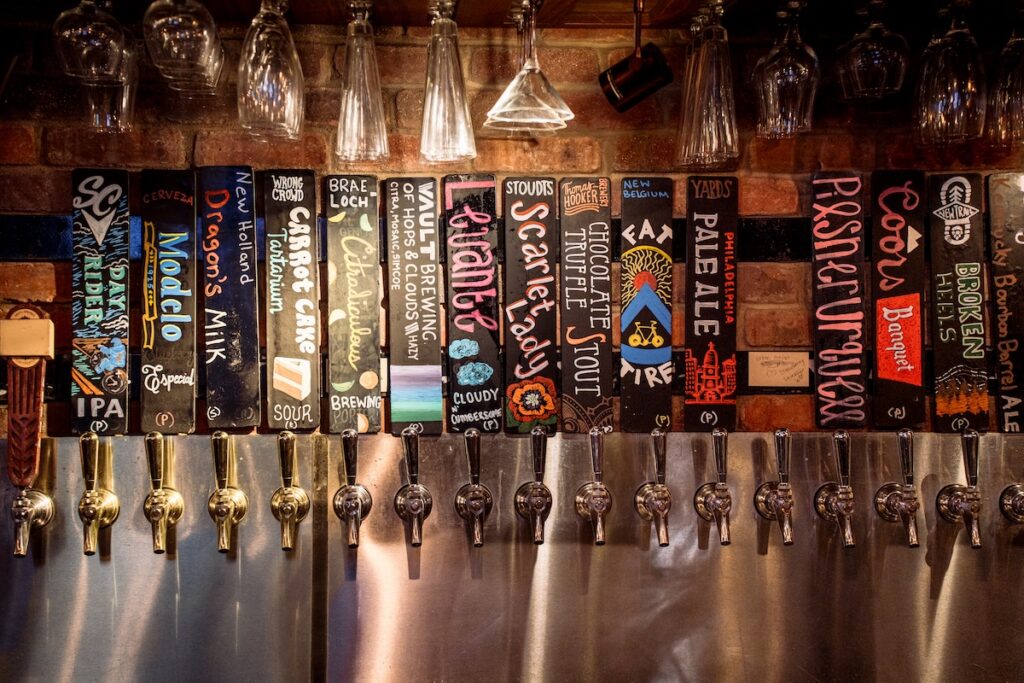
Next, ask what makes the concept hard to copy. Our answer starts with variety: more than 250 beers from over 40 countries on rotating taps. Local beer experts at each location work with breweries and distributors to bring rare finds and regional favorites to the table.
That local sourcing gives each World of Beer Bar & Kitchen its own personality, so no two locations are exactly alike. Guests come back because the beer list keeps changing. Our food and cocktails get the same creative attention. In fact, you can read how the concept took shape in our brand story.
Every FDD also answers deeper history questions. Item 2 lists the leadership team’s business experience, and Items 3 and 4 disclose litigation and bankruptcy history. Item 21 contains the franchisor’s financial statements, so read all four Items in any FDD you receive and ask the franchisor to explain anything unclear.
Questions to Ask About Startup Costs and Total Investment
Costs are where buyers most often get surprised, and the franchise fee is usually the smallest piece. Item 5 of an FDD covers initial fees, meaning what you pay the franchisor to join the system. Item 7 covers the estimated initial investment, meaning everything it takes to open your doors.
What Is the Total Initial Investment?
According to Item 7 of our 2026 FDD, a single World of Beer Bar & Kitchen requires an estimated initial investment of $1,892,330 to $3,962,125 for a single location. An area development agreement is a contract to open several restaurants on a set schedule. Item 7 estimates $1,964,830 to $4,102,125 for an area development agreement covering 2–5 restaurants.
Inside that total, Item 5 lists our initial franchise fee of $50,000 for your first restaurant and $45,000 for each additional unit. The rest covers leasehold improvements, equipment, signage, and smallwares. It also includes three months of working capital, which is cash to cover expenses while sales ramp up.
The estimate assumes you lease a space of 3,500–6,000 square feet, with about 4,800 square feet as the ideal size, per Item 7. Ask the franchisor which factors pushed recent openings toward the high end, such as the condition of the space or local construction prices. Then compare those answers with what owners tell you on validation calls.
What Ongoing Fees Will You Pay?
Ongoing fees shape your margins for the life of the agreement, so ask for every recurring charge in one place. The table below lists the main fees in Item 6 of our 2026 FDD, along with a follow-up question worth asking about each one.
| Fee | Amount | Question to Ask |
|---|---|---|
| Royalty | 5% of Net Sales | How is Net Sales defined in the agreement? |
| Marketing Fund | 1.5%–3% | What decides where in the range I’ll pay? |
| Local advertising | 0.5% | Which local spending counts toward this amount? |
| Opening advertising | $5,000 minimum | What must the grand opening campaign include? |
| MIS fee | $495 per month | Which software and support does this fee cover? |
MIS stands for management information systems, meaning the technology you use to run and report on the business. Ask how each fee behaves in slow months. Our 2026 FDD notes that royalties are owed even if your restaurant loses money, so plan your working capital with that in mind.
Questions to Ask About Revenue and Profitability
Costs tell half the story, so your next questions should focus on what a restaurant can earn. Item 19 of an FDD contains financial performance representations, which are any figures the franchisor shares about sales or profit. Franchisors aren’t required to include an Item 19, and if they leave it out, no one selling the franchise should give you earnings figures.
Our 2026 FDD includes an Item 19 that covers both company-affiliated and franchised restaurants. When you review any Item 19, ask whether the figures show gross sales or net profit, and ask which restaurants are included. Also ask how long those restaurants had been open, since mature units and new units rarely perform the same way.
Broader restaurant data helps you set expectations. The National Restaurant Association 2026 forecast says “total restaurant and foodservice sales are projected to reach $1.55 trillion” this year. The same report flags the risk: “Last year, 42 percent of operators reported their restaurant was not profitable.”
Demand is strong, but margins are thin, so stress-test every assumption with an accountant. Build a pro forma (a projected profit-and-loss statement) using conservative sales figures and real local rents. Then add the Item 6 fees and compare the result with what current owners tell you about their first years.
Questions to Ask About Training and Ongoing Support
Strong support is part of what your royalties pay for, so ask exactly who gets trained and what it costs. At World of Beer, initial training covers you or your Operating Principal (the owner designated to lead the business) plus one other person. According to Item 5 of our 2026 FDD, we charge no training fee, and you cover travel and living expenses.
Item 11 of our 2026 FDD provides 5–15 days of on-site opening support. During that time, our team works alongside your staff. We also offer refresher training at no cost to you, so new managers can learn the system as your team grows.
Ask what support looks like in year three, well after the excitement of opening fades. Our ongoing franchisee training and support includes field visits, operations manuals, supplier guidance, beer education, and menu innovation. We handle those systems so your team can focus on guests.
Also ask what happens when you need extra help beyond the standard program. We may charge a per diem fee for additional on-site assistance, and any franchisor should tell you its policy up front. Knowing that cost in advance keeps a tough month from turning into a budget surprise.
Questions to Ask About Site Selection, Territory, and Timeline
Location can make or break a restaurant, so ask who chooses the site and how approval works. With World of Beer, you find the site and we approve it. Item 11 of our 2026 FDD calls for site selection within 90 days, and approval weighs demographics, traffic, parking, and nearby competition.
Next, ask what protection you get once the site is set. A protected territory is an area where the franchisor agrees not to open or license another location of the same brand. Item 12 of our 2026 FDD describes a Protected Territory that is typically a 5-mile radius, adjusted for each market.
Then ask how long the opening really takes. Item 11 of our 2026 FDD estimates 9–18 months from signing to opening. The agreement also sets an opening deadline tied to your signing date and site approval, so ask what happens if construction or permits run late.
If you want to grow, ask about multi-unit rights. Our area development agreements require a minimum of 2 restaurants, per Item 5, with a schedule for opening each one. Multi-unit owners also pay $45,000 instead of $50,000 for each additional franchise fee, per Item 5.
Restaurant-Specific Questions for Alcohol-Serving Concepts
Many franchise checklists skip alcohol, yet state and local licensing shapes your timeline and costs. The TTB alcohol FAQs state, “The TTB does NOT issue a license to sell tobacco or beverage alcohol products at retail. You must contact your State or local licensing authority to obtain a retail license.”
Ask how long licenses take in your market and who handles the application. Our 2026 FDD notes that we can’t estimate liquor license costs, because they vary by licensing authority. Research your local rules early, since a delayed license can delay your opening day.
Ask how royalties apply to alcohol sales, because some states prohibit percentage-based payments on them. In those states, Item 6 of our 2026 FDD replaces percentage fees with flat weekly amounts. Owners there pay a $1,730 weekly royalty and an $865 weekly Marketing Fund contribution.
Next, ask how the beverage program keeps guests coming back. Ours runs on rotating global taps and retail beer sales for off-premises consumption, so guests can take a favorite home. Curated flights and fresh-ingredient cocktails give guests a reason to try something new on every visit.
Ask, too, how the brand plans for shifts in beer demand. Per the Brewers Association national beer stats, “Retail dollar sales of craft decreased 2.8%, to $28.0 billion, and now account for 24.8% of the $113 billion U.S. beer market.” That mix of a large market and softer craft sales is why we pair global beer variety with a full kitchen and spirits.
A good franchisor should explain its beverage strategy with the same detail it gives its food menu. You can compare how other brands approach the category in our guide to craft beer franchise opportunities.
Questions to Ask About Rules, Suppliers, and Your Contract
The franchise agreement turns every answer into an obligation, so ask how much control the franchisor keeps. Item 8 of any FDD lists restrictions on suppliers and products. At World of Beer, you buy from approved suppliers, and you use a required architect for your initial plans.
Ask how the operations manual can change over time. Our manuals can be updated during your term, which keeps the system current but means your standards may shift. Ask how changes are communicated and whether they ever require new equipment or remodeling.
Ask next about the term and what happens at the end of it. Item 17 of our 2026 FDD sets a 10-year term with no right to renew, though we may offer a successor franchise for a fee. Ask what conditions apply to that offer so you can plan your exit or your next decade.
Ask how you can sell or transfer the business and what limits apply after you leave. Our agreement includes transfer rules and a post-term non-compete, which restricts you from running a competing business for a set period. Read those clauses closely, since they affect the resale value of your restaurant.
Have a franchise attorney review the agreement and an accountant review the numbers before you sign. Their fees are small compared with a multimillion-dollar commitment. They’ll also spot terms that a first-time buyer could easily miss.
Questions to Ask Current and Former Franchisees
Current and former owners give you the most honest answers, and the FDD tells you where to find them. Item 20 of our 2026 FDD lists current and former franchisees in Exhibits I and J. Call several owners from each list and ask questions like these:
- What did your build-out actually cost compared with the Item 7 estimate?
- How long did it take to open, from signing to your first day of service?
- How helpful was the franchisor’s support during training and opening?
- How long did it take your restaurant to become profitable?
- Which local marketing efforts worked best in your market?
- Would you buy this franchise again, knowing what you know now?
Former owners matter as much as current ones, because they can explain why they left. Validation calls are a built-in part of our path to franchise ownership, and we encourage you to make them before you sign. Take notes on each call so you can compare answers side by side.
Red Flags to Watch For
Your questions can also reveal warning signs, and pressure to sign quickly is the first one. The FTC Franchise Rule FAQs describe “the amended Rule’s 14 calendar-day disclosure requirement.” Any push to sign or pay before those 14 days pass is a serious concern.
Be cautious of earnings promises made verbally or outside Item 19, since they aren’t part of the official disclosure. High franchisee turnover in Item 20 deserves a follow-up question. So does an Item 7 table that leaves out costs you know you’ll face, such as liquor licensing or local permits.
Finally, notice how the franchisor responds when you ask to call owners. A transparent franchisor hands you the lists and gives you time to decide. That’s the standard we hold ourselves to at World of Beer.
Frequently Asked Questions
What is the most important question to ask a franchisor?
Ask for the total all-in investment and how current owners’ actual costs compared with it. That one question tests both the FDD’s Item 7 and the franchisor’s transparency.
How much does it cost to open a World of Beer Bar & Kitchen?
According to Item 7 of our 2026 FDD, a single restaurant requires an estimated $1,892,330 to $3,962,125. That total includes the $50,000 initial franchise fee.
How long does it take to open a restaurant franchise?
Timelines vary by concept and market, and Item 11 of our 2026 FDD estimates 9–18 months for a World of Beer Bar & Kitchen. Liquor licensing and construction permits are often the biggest variables.
Do I need restaurant experience to buy a restaurant franchise?
World of Beer’s robust initial training covers daily operations, but the best applicants bring relevant business and operational expertise to the table. Candidates should meet financial qualifications, have an appropriate business-owner mindset, and a commitment to hospitality.
Can franchisors tell me how much I will earn?
Franchisors may share earnings data only through Item 19 of the FDD, and they aren’t required to include it. Our 2026 FDD includes an Item 19 covering company-affiliated and franchised restaurants.
How big is the franchise industry in 2026?
The IFA 2026 Franchising Economic Outlook says, “Franchise output is expected to rise from $907.3 billion to $921.4 billion – an increase of 1.6%.”
Bring Your Questions to the World of Beer Team
The right questions turn an FDD from a stack of legal pages into a clear decision. We welcome every question in this guide, and we back our answers with hands-on training and a protected territory around your craft beer restaurant.
Bring your list to our development team, compare our answers with any other brand you’re considering, and take the time you need. When you’re ready to learn more about the opportunity, start by requesting our franchise guide.